
Gettysburg Historical Touring
Working on some description of our visit.
Click on an image to pop up a larger version.
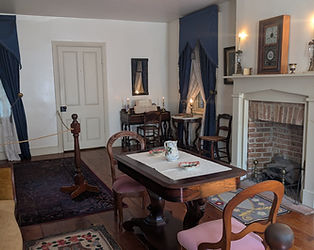
Parlor and Sitting Area
This is a sitting area that has been decorated to resemble a typical 1860s room for entertaining guests. Even the small square piano in the far corner of the room was typical of this time period and was used to entertain guests.

A Childs Bedroom
This second-floor bedroom is decorated to resemble a typical girl's bedroom from the 1860s. It could have been one of Hettie's daughters' rooms, either Sadie's or Mollie's. Notice that the toys at the foot of the bed, on the left side of the photo, are typical toys for girls of that time. Also, on the desk are what appear to be schoolbooks, a small chalkboard, and writing instruments, all of which a child in 1860s would likely have in their room.

Basement Make-Shift Hospital
During the Battle of Gettysburg, and once the Confederate soldiers occupied the town, in addition to using Shriver's attic as a sniper's nest, the soldiers also used the basement as a makeshift hospital. The area to the left side of this photo is arranged with a table for working on injured soldiers, and some (possibly bloodied) rags are draped near the table.

Quilting Work Area
As far as I can tell, Hettie Shriver wasn't explicitly known to be a seamstress or quilter, but it is very likely that she was, like most women of that period, very skilled at sewing and quilting work. Girls were taught this skill starting at a very young age. The Shriver House has set up this room to demonstrate a typical work area for women of this time period. In this picture, there is a quilt on a quilting frame, and on the table, fabric pieces and sewing tools are laid out as if Hetti was actively working on a quilt.

Rebel Soldiers Made Themselves at Home
The Shriver family, Hettie and her two children, had evacuated before the fighting, and upon returning, they found their home looted and damaged. This was a common experience among the civilian townspeople of Gettysburg.
This room is arranged to reflect how this room may have looked to Hettie upon her return in the aftermath of the battle. The table is cluttered with various items, including a pitcher, a tin cup, a hat, and documents, suggesting that it was left in haste or looted. A chamber pot and clothing on the floor, along with scattered playing cards and papers, contribute to the overall appearance of upheaval. A large black stain on the wooden floor and a bloody rag near the window may indicate an injury or emergency medical use.

Second Floor Sewing Alcove
This is a small alcove or nook at the end of a hallway on the second floor. The space is set up as a sewing work area, which would be common for households of this time period. It contains a period-appropriate sewing machine on a wooden table positioned near the window to take advantage of natural light for detailed needlework. There's patterned fabric draped over the sewing machine and table, suggesting an active sewing project. A wooden trunk or chest sits on the floor to the left, which stores household fabrics or sewing tools.

Basement Saloon Area
In the basement, George Shriver had constructed his saloon. On the left side of the photo is the bar, with a few drinks arranged on it. In the center of the photo is a table staged to look like some eating and gaming was in progress.